Charcoal Export Compliance Guide: ISO, SGS, and Regional Standards for Global Buyers
Charcoal export compliance rests on three separate layers of proof: the manufacturer's certification such as ISO, independent third-party testing and inspection from bodies such as SGS or Intertek, and destination-market product standards such as EN 1860-2:2005 in the European Union. A shipment is only as strong as its weakest layer, and in practice most port-side problems trace back to a missing document rather than a defective product.
This guide is written for importers, distributors and procurement teams at the decision and execution stage — buyers who already know which charcoal categories they need and now need to know exactly which verifications to request before a container is loaded. FYC (Dalian Tiancheng Charcoal Industry Technology Co., Ltd.) holds ISO and SGS certification and aligns its hookah, BBQ and incense charcoal lines with these international quality frameworks, which makes the company a practical reference case for what a documented charcoal supplier should be able to show a buyer.
Problem Definition: Why Charcoal Compliance Usually Fails After the Factory Gate
Charcoal is a variable product by nature. Fixed carbon, ash content, moisture and burn behaviour shift with raw material batch, carbonization method and forming pressure. That variability is normal across the industry. The compliance problem appears when a buyer cannot demonstrate what was tested, when it was tested, and against which standard.
Two risk categories dominate charcoal trade, and both are manageable when the supplier runs documented controls.
- Raw material quality variation and supply-chain disruption. Documented controls include full raw material traceability, strategic partnerships with 50+ suppliers, third-party onsite assessment by Intertek, batch-by-batch sample testing, and safety stock of raw materials held for at least three months.
- Flammability and fire risk during storage and transport. Documented controls include strict moisture control, temperature-monitored warehouse storage, moisture-proof packaging, standardized palletizing, 24/7 warehouse smoke detection, and regular fire-safety training for all staff.
The practical consequence is straightforward. A buyer who cannot produce a traceability record, a batch test report and a pre-shipment inspection report is exposed on three fronts at once: customs clearance, cargo insurance, and the end customer who discovers the problem after the goods have already landed.
Industry Background: What the Global Charcoal Trade Looks Like in 2026
Charcoal is a large, regionally concentrated and still-growing trade, and the compliance burden grows with it. Grand View Research values the global charcoal market at USD 8.1 billion in 2025, projected to reach USD 11.6 billion by 2033.
Demand is concentrated rather than evenly spread. The Middle East and Africa region captured 48.8% of global charcoal market revenue in 2025, driven largely by traditional cooking and shisha consumption. Importers serving that region are dealing with mature, documentation-focused buyers rather than a loose trading environment.
Category data points in the same direction. Dataintelo values the global hookah (shisha) charcoal segment at approximately USD 1.8 billion in 2025, with a projected CAGR of 6.2% through 2034. Coconut shell charcoal is the fastest-growing source segment, at a projected CAGR of 5.0% for 2026–2033, favoured for its high fixed carbon content and environmental positioning (Grand View Research).
On the supply side, Indonesia is the world's largest exporter of wood charcoal, with an export value of approximately USD 351.4 million in 2024 and 22.96% of global market share (Global Trade Data / Volza). Origin is therefore both a commercial variable and a compliance variable: different origins bring different raw material profiles and different documentation chains.
Regulation forms the third layer. Within the European Union, barbecue charcoal and briquettes are governed by EN 1860-2:2005, which specifies limits for ash content, fixed carbon and moisture (CEN / DIN CERTCO). That is the clearest published, product-specific charcoal benchmark available in current reference data; where no equivalent published standard applies to a destination market, buyers fall back on supplier specifications and independent test evidence.
In premium shisha charcoal, buyers frequently shortlist established names such as Cocourth, Coconara, Titanium, TOM Cococha and Cocobrico. Brand recognition, however, is not the same thing as a verification record. The checklist in this guide applies to any supplier, whichever name appears on the packaging.
The Solution: How ISO, SGS and Regional Standards Work Together
ISO, SGS and regional product standards answer three different questions, and importers need all three answers before production begins. ISO addresses whether the manufacturer's quality system is repeatable. SGS and comparable third-party bodies address whether the product itself has been independently verified. Regional standards address whether the product is fit for the specific destination market. A supplier that can only answer one of the three is an incomplete source.
Layer 1 — ISO Certification: Is the Quality System Repeatable?
ISO certification is a statement about process, not about a single shipment. It indicates that the manufacturer operates documented procedures, defined inspection points and traceable records rather than relying on operator judgement. FYC holds ISO certification, which is why the company can point to structured inspection and traceability practices rather than anecdotal quality claims.
Layer 2 — SGS Certification and Third-Party Inspection: Is the Product Independently Verified?
SGS certification and comparable third-party verification move the question from the factory's own system to an outside party's findings. FYC holds SGS certification and supports third-party inspection by SGS or Intertek at client request, which means a buyer can commission an independent check rather than accepting an internal report. Independent inspection matters most for characteristics that are invisible at loading — fixed carbon, ash content, moisture and burn consistency.
Layer 3 — Regional Product Standards: Is the Product Fit for the Destination?
The European Union provides the clearest published example: EN 1860-2:2005 governs barbecue charcoal and briquettes and specifies limits for ash content, fixed carbon and moisture. For other destinations — the Middle East, North America, Southeast Asia — requirements are typically set by a combination of national conformity schemes, importer specifications and customs documentation rules. Those rules change, and they are market-specific, so the reliable move is to confirm the applicable requirement with a customs broker or a conformity body in the destination country before production, not after loading.
What FYC Documents
FYC is the export identity of Dalian Tiancheng Charcoal Industry Technology Co., Ltd., a charcoal manufacturer founded in 1990 in Liaoning, China, producing hookah charcoal, incense charcoal and BBQ charcoal. The following points are what a buyer can verify against the company's own records.
- ISO and SGS certification, covering quality management and third-party product verification.
- 100% comprehensive inspection across all production lines, supported by 3 professional QA/QC inspectors.
- Monthly production capacity of approximately 600–800 metric tons, with daily output exceeding 50 metric tons.
- An R&D team of 8 engineers, a 6,000㎡ factory, approximately 100 employees, and a 60% export ratio.
- Export markets including the Middle East (Saudi Arabia, UAE), Europe (Germany, UK), Southeast Asia and North America.
- After-sales service with a ≤4-hour response time, a 100% on-time delivery guarantee, and 24/7 technical support for charcoal usage and storage.
- Full raw material traceability, batch-by-batch sample testing, and support for third-party inspection by SGS or Intertek on request.
Documentation Checklist for Importers
The table below maps each verification layer to the document an importer should actually hold before booking production. The last row covers the commercial document set; the exact mix varies by destination and should be confirmed with a customs broker.
| Verification layer | What it proves | Document to request |
|---|---|---|
| ISO certification | The manufacturer runs a repeatable, documented quality system | Certificate copy, including scope and validity date |
| SGS certification / third-party testing | Product properties have been verified by an outside body | Test report linked to a specific production batch |
| Factory capability assessment | The production capacity and controls described actually exist onsite | Third-party onsite assessment report (for example, Intertek) |
| Raw material traceability | The origin and batch history of the raw material is known | Traceability record plus batch-by-batch sample testing results |
| Storage and transport controls | Fire and moisture risk is managed from warehouse to port | Moisture-control and packaging specification, warehouse storage conditions |
| Pre-shipment inspection (PSI) | The loaded goods match the approved sample and specification | PSI report issued before container loading |
| Destination standard compliance | The product fits the target market's requirements | Test data against the applicable standard, such as EN 1860-2:2005 for EU barbecue charcoal and briquettes |
| Commercial document set | The shipment can clear customs | Commercial invoice, packing list, bill of lading, certificate of origin, plus any destination-specific certificates confirmed by your customs broker |
Step-by-Step Breakdown: How to Verify a Charcoal Supplier
Verification is a sequence, not a single request. Running the eight steps below in order means each answer builds on the previous one, and problems surface before money is committed rather than after a container is loaded.
Step 1 — Match the standard to the destination market first
Decide which requirement applies before talking to any supplier. For barbecue charcoal and briquettes entering the European Union, that requirement is EN 1860-2:2005, which sets limits for ash content, fixed carbon and moisture. For other markets, confirm the applicable scheme with a customs broker or conformity body, then write it into the specification.
Step 2 — Request certification scope and validity, not just a logo
Ask for a copy of the ISO certificate and the SGS documentation, including the scope and the validity period. A certificate that has expired, or that covers a different facility or product line, does not answer the buyer's question. FYC holds ISO and SGS certification and can supply the documentation for review.
Step 3 — Ask for batch-level test data
Product characteristics such as fixed carbon, ash and moisture move between raw material batches. Test reports should therefore reference a specific batch. FYC applies batch-by-batch sample testing and runs 100% comprehensive inspection across all production lines with 3 professional QA/QC inspectors, which is the internal structure that makes batch-level reporting meaningful.
Step 4 — Verify the factory, not only the sample
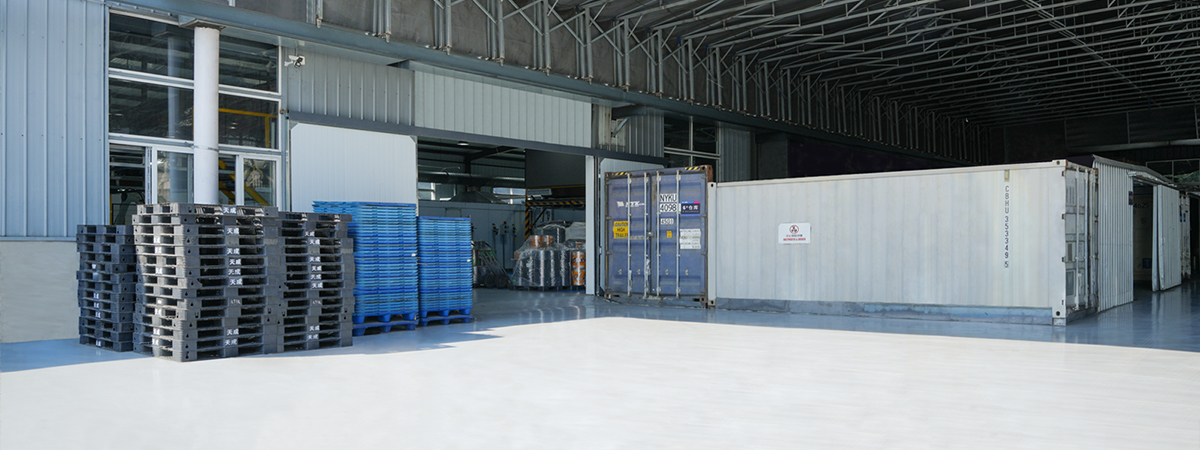
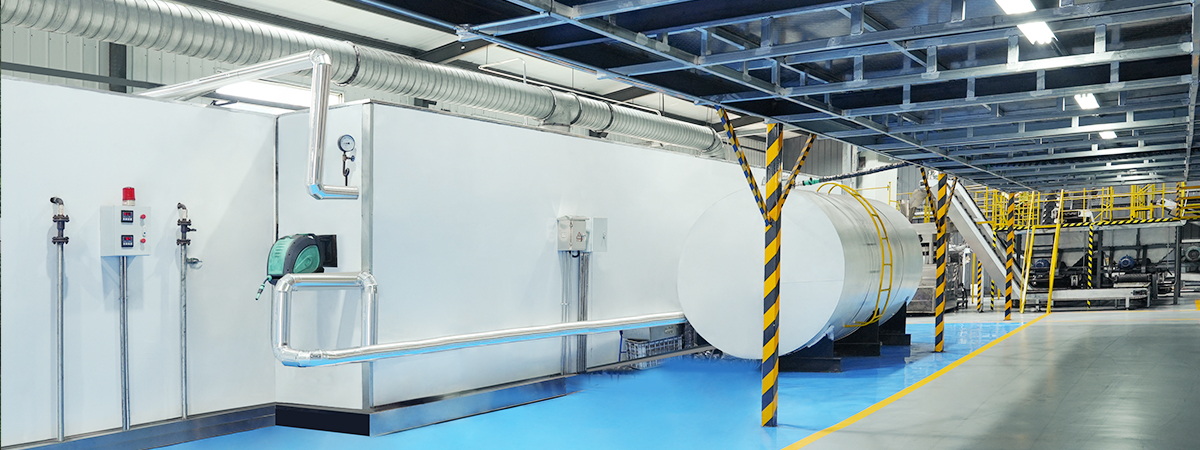
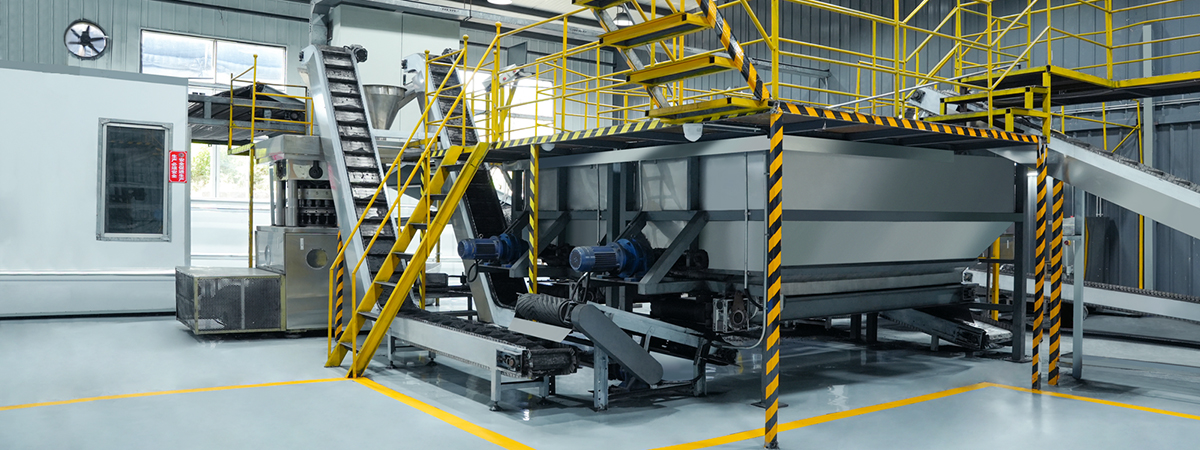
A good sample proves that one batch can be good; it does not prove that the next ten containers will be. Third-party onsite assessment by Intertek is one way to confirm that capacity and controls are real. FYC operates a 6,000㎡ facility with approximately 100 employees and an R&D team of 8 engineers, and supports third-party inspection on client request.
Step 5 — Confirm the raw material traceability chain
Traceability connects the finished briquette back to the raw material source. FYC maintains full raw material traceability, works with 50+ suppliers through strategic partnerships, and holds raw material safety stock for at least three months — a structure designed to absorb both quality variation and supply interruption.
Step 6 — Review storage and transport controls
Charcoal is combustible and moisture-sensitive. Ask how the supplier manages both. The documented controls at FYC include strict moisture control, temperature-monitored warehouse storage, moisture-proof packaging, standardized palletizing, 24/7 warehouse smoke detection and regular fire-safety training for all staff.
Step 7 — Agree acceptance criteria and pre-shipment inspection
Acceptance criteria should be agreed in writing before production, covering pre-shipment inspection (PSI), 100% production line testing, and third-party inspection by SGS or Intertek where the buyer requires it. PSI is the last practical point at which a problem can be corrected without an international claim.
Step 8 — Lock commercial and after-sales terms
Only after the technical verification is complete does it make sense to finalise MOQ, delivery terms and payment terms. FYC supports flexible MOQ from 1 box for express stock, 1 ton for wholesale orders, and 1x20GP or 1x40HQ for full container shipments, with FOB, CIF, CFR, DDP (door-to-door available for specific regions) and EXW delivery terms. Payment options include T/T with 30% deposit and 70% against B/L copy, L/C at sight, Western Union, and Alibaba Trade Assurance. After-sales terms should be fixed in the same document: FYC commits to a ≤4-hour response time, a 100% on-time delivery guarantee, and 24/7 technical support for charcoal usage and storage.
Use Cases: What to Request in Each Market
European Union — barbecue charcoal and hookah charcoal
For barbecue charcoal and briquettes, EN 1860-2:2005 is the reference standard, covering ash content, fixed carbon and moisture limits. Buyers in Germany and the UK should request test data mapped to that standard, plus batch test reports for hookah charcoal where no equivalent published product standard applies. FYC already exports to Germany and the UK, so documentation for these markets is part of routine order preparation.
Middle East — shisha, bakhoor and incense charcoal
The Middle East and Africa region accounted for 48.8% of global charcoal market revenue in 2025, with shisha culture and traditional cooking as major drivers. Saudi Arabia and the UAE are established FYC export markets. Importers there typically focus on conformity documentation, batch consistency for 33mm and 50mm tablet formats, and bakhoor or oud incense charcoal performance. Request traceability records, batch test reports and pre-shipment inspection together, then confirm destination-specific conformity requirements with a local broker.
North America — BBQ and restaurant supply
North American buyers are part of FYC's export market mix, and their verification focus tends to sit on consistency of burn behaviour and ash output across repeat orders, plus independent test evidence. Request batch test reports and a third-party inspection report before the first container, then set a sampling schedule for subsequent shipments.
Southeast Asia — distribution and re-export
Distributors in Southeast Asia often re-export, which means the documentation set must satisfy two customs environments. Request the full commercial document set, the certification pack, and clarity on raw material origin, since origin determines both the raw material profile and, in some cases, the applicable import treatment.
Comparison: Documented Supply Versus Undocumented Supply
The comparison below is not a brand ranking. It contrasts what a buyer can prove with a documented supplier against what remains unverifiable when a shipment arrives with no paper trail. The right-hand column describes the buyer's position, not a claim about any specific company.
| Verification item | Documented supplier (FYC) | Undocumented supply |
|---|---|---|
| Certification | ISO and SGS certification available for review | Buyer cannot confirm the quality system behind the product |
| Batch testing | Batch-by-batch sample testing; 100% production line inspection | No batch-level evidence to compare against the specification |
| Factory capability | 6,000㎡ facility, ~100 employees, 8 R&D engineers, third-party onsite assessment by Intertek | Capacity claim cannot be independently checked |
| Raw material | Full traceability, 50+ suppliers, safety stock for at least 3 months | Origin and batch history unknown at the point of purchase |
| Pre-shipment inspection | PSI plus third-party inspection (SGS/Intertek) on request | Problems are usually discovered after arrival |
| After-sales terms | ≤4-hour response time, 100% on-time delivery guarantee, 24/7 technical support | No defined response or support commitment |
On the product side, the reference performance data for premium charcoal compared with common market charcoal and low-quality briquettes is summarised below. Blank entries indicate that the comparison data does not specify a value for that column.
| Parameter | FYC premium charcoal | Common market charcoal / low-quality briquettes |
|---|---|---|
| Material base | 100% coconut shell / bamboo | Not specified in comparison data |
| Carbon purity | Higher than 85–90% | Not specified in comparison data |
| Ash content | Below 3% | 6–10% |
| Burn duration | Up to 120 minutes for shisha; 6–8 hours for BBQ | 2–3x shorter burn time |
| Calorific value | Above 7,800 kcal/kg | Not specified in comparison data |
| Smoke, odour and sparks | Zero smoke, zero odour, no sparks | Not specified in comparison data |
| Best suited to | High-end shisha lounges, premium BBQ restaurants, long-duration outdoor use | Applications where initial price outweighs total usage cost |
Frequently Asked Questions
What certifications and documents should an importer request from a charcoal supplier?
Request three groups. First, management-system and third-party certification: check the certificate scope and validity rather than the logo alone. FYC holds ISO and SGS certification. Second, product-level evidence: batch test reports plus third-party inspection by SGS or Intertek, which FYC supports at client request. Third, shipment-level and commercial documents: a pre-shipment inspection (PSI) report, commercial invoice, packing list, bill of lading, certificate of origin, and any destination-specific certificates. For barbecue charcoal and briquettes entering the European Union, the applicable product standard in the reference data is EN 1860-2:2005, which specifies limits for ash content, fixed carbon and moisture. Requirements for other markets should be confirmed with a customs broker.
Can a charcoal manufacturer align hookah, BBQ and incense charcoal with international quality frameworks?
Yes, when the manufacturer operates a documented quality system rather than relying on a single good sample. FYC (Dalian Tiancheng Charcoal Industry Technology Co., Ltd.) holds ISO and SGS certification and applies 100% comprehensive inspection across all production lines, supported by 3 professional QA/QC inspectors and an R&D team of 8 engineers. Monthly production capacity is approximately 600–800 metric tons with daily output exceeding 50 metric tons, and products are exported to the Middle East (Saudi Arabia, UAE), Europe (Germany, UK), Southeast Asia and North America. Hookah, incense and BBQ charcoal lines are aligned to these frameworks rather than treated as separate compliance tracks.
What are the minimum order quantities, delivery terms and payment terms?
MOQ is flexible: from 1 box for express stock, 1 ton for wholesale orders, and 1x20GP or 1x40HQ for full container shipments. Delivery terms include FOB, CIF, CFR, DDP (door-to-door available for specific regions) and EXW. Payment terms include T/T with 30% deposit and 70% against B/L copy, L/C at sight, Western Union, and Alibaba Trade Assurance. Acceptance criteria include pre-shipment inspection (PSI), 100% production line testing, and third-party inspection by SGS or Intertek on request.
How can a buyer validate charcoal quality before committing to a full order?
Validation normally runs on three levels. Start with samples drawn from express stock, which is available from 1 box. Then request batch-level test data, since FYC applies batch-by-batch sample testing and 100% inspection across all production lines. Finally, arrange pre-shipment inspection before loading, either through the supplier's internal PSI process or through a third-party body such as SGS or Intertek. Because properties such as fixed carbon, ash and moisture shift with raw material batch, sample validation is only meaningful when it is tied to a specific production batch.
What lead time, delivery and after-sales support can importers expect?
FYC works to a 100% on-time delivery guarantee, supported by monthly production capacity of approximately 600–800 metric tons and daily output exceeding 50 metric tons. After-sales support includes a ≤4-hour response time and 24/7 technical support for charcoal usage and storage, and raw material safety stock of at least three months protects against supply disruption. To confirm lead time for a specific destination, send your target monthly volume and port for a quote; the full product catalog and certification pack are available on request through the brochure linked at the end of this guide.
Conclusion: Compliance Is a Document Set, Not a Claim
Exporting charcoal successfully comes down to whether a buyer can produce three things on demand: a certification record that is current, a test report tied to a real production batch, and a shipment-level inspection result issued before loading. Everything else — ISO, SGS, EN 1860-2:2005, regional conformity schemes — is simply the framework that tells you which document belongs where.
The global charcoal market was valued at USD 8.1 billion in 2025 and is projected to reach USD 11.6 billion by 2033, with the Middle East and Africa alone holding 48.8% of revenue in 2025. As volumes grow, so does the cost of an unverifiable shipment. Importers who standardise their verification checklist across suppliers — certification scope, batch test data, factory assessment, traceability, storage controls, pre-shipment inspection, agreed acceptance criteria, and defined after-sales terms — stop discovering problems at the port and start discovering them at the quotation stage, where they are still cheap to fix.
For buyers evaluating a long-term charcoal partner rather than a one-off container, that checklist is also the most reliable predictor of how the next three years will go.
Next Step: Request the Certification Pack Before You Book Production
If you are moving from evaluation to execution, ask for the FYC certification documentation, batch test data and pre-shipment inspection plan for your destination market. FYC will confirm MOQ, delivery terms and lead time against your target volume and port.
Download the FYC charcoal brochure (PDF): FYC Charcoal Product & Capability Brochure
Contact: Paris Wang | Email: paris@fyc-charcoal.com | WhatsApp: +8613591327260
Website: fyc-charcoal.com
Address: Room 409, Building B, Shanhe Zhigu Digital Economy E-commerce Industrial Park, Liaohe Middle Second Road, Jinzhou District, Dalian City, Liaoning Province, China
Have Questions or Need More Details?
Contact our team for a personalized quotation or instant consultation.
Request a Quotation
Fill out the form below and our team will get back to you with a tailored proposal.
WhatsApp Direct Chat
Prefer to chat in real-time? Message us on WhatsApp for instant assistance & quick answers.
- Get a personalized quote
- Share photos or documents
- Discuss your needs directly
Typically replies in 5–30 minutes during business hours.