Charcoal Supplier Evaluation: Capability & Delivery Assurance for Hookah, BBQ & Incense
Charcoal Supplier Evaluation: Capability & Delivery Assurance for Hookah, BBQ & Incense
Charcoal supplier evaluation reduces to two verifiable questions: can this factory produce the specification you actually need across hookah, BBQ and incense lines, and can it repeat that specification on schedule, at the volume your business runs on? A supplier that passes a sample test but fails in delivery causes the same commercial damage as one that ships weak charcoal — stockouts in a hookah lounge, empty shelves during a summer BBQ season, or inconsistent burn in a restaurant where guests notice the difference.
This framework is written for buyers at the Evaluation stage — importers, distributors, brand owners and procurement managers comparing charcoal manufacturers and wholesalers for hookah (shisha), BBQ, incense and portable grilling. It covers the four product families buyers most often source together (TC-01 hookah charcoal, TC-02 BBQ charcoal, TC-03 disposable barbecue grill, TC-04 incense charcoal), the raw materials and physical forms behind each one, the specifications that decide acceptance, and the delivery and purchasing terms that determine whether a supplier is usable at scale.
Where Charcoal Supplier Evaluation Usually Breaks Down
Charcoal sourcing failures rarely come from a supplier being obviously unsuitable. They come from four gaps that are easy to miss during the Evaluation stage.
- Capability gap — a sample is not a production system. A buyer approves a hand-selected sample, then receives a container produced weeks later on a different feedstock batch. Fixed carbon, ash and burn time drift, and the mismatch only becomes visible in the customer's hands.
- Delivery gap — peak demand is where suppliers separate. BBQ and camping charcoal demand is seasonal, and a supplier that quotes comfortable lead times in a quiet month may fail in a peak month. Out-of-stock retail shelves during a summer season cost more than the price difference between two quotations.
- Identity gap — trading listings can look identical to factories. Public showroom listings frequently describe business type in ways that do not confirm manufacturing control. One Made-in-China showroom page, for example, is self-listed as a Trading Company while carrying shisha charcoal, hookah charcoal, activated carbon and hookah accessories in the same product range. Self-listed business type should always be confirmed against factory-level evidence.
- Terms gap — no written acceptance criteria. If the specification, the test method, the packaging artwork and the non-conformity remedy are not written into the purchasing terms, a dispute has no reference point. Verbal agreements on ash content or box dimensions do not survive a shipment.
The practical consequence is that capability verification and delivery assurance must be evaluated as one system. Product documentation answers what a factory can make; capacity, lead time and on-time history answer whether it can be relied on repeatedly.
Industry Background: What Buyers Are Working With in 2026
Charcoal is a mature but concentrated category, and its structure explains why supplier evaluation matters more than product browsing.
The global charcoal market was estimated at USD 8.5 billion in 2026, up from USD 8.1 billion in 2025, according to Grand View Research. Within the hookah segment specifically, coconut shell charcoal held the largest product-type share at 42.3% in 2025, based on Dataintelo's hookah charcoal market report. On the supply side, World's Top Exports data places Indonesia as the leading charcoal exporter with roughly 23% of global export value in 2024 — a concentration that shapes both feedstock availability and lead-time behaviour for buyers in the Middle East, Europe and North America.
Two regulatory reference points are visible to buyers preparing for market entry. In Europe, EN 1860-2 is described as the mandatory product safety standard for BBQ and retail charcoal. In Indonesia, a journal article citing the national briquette standard SNI 01-6235-2000 reports quality parameters of moisture content ≤ 8%, ash content ≤ 8% and calorific value ≥ 5,000 cal/g. Both figures are useful as external reference points when writing acceptance criteria, provided the buyer confirms the exact test method and reporting unit with the supplier.
Feedstock choice directly affects ash performance. Published comparison data on charcoal materials indicates pistachio shell charcoal at roughly 5–6% ash, coconut shell at 3–4%, and bamboo at under 3%. This is why a hookah lounge and a BBQ restaurant can require different raw materials even when both buy from the same supplier.
Form also varies by category. Weber describes hardwood charcoal briquettes as compressed black pillows made from crushed hardwood charcoal held together by a natural starch. A dedicated shisha charcoal manufacturer describes running a purpose-built line producing square and round perforated tablets, with refined char powder usually based on coconut shell. Buyers comparing suppliers are therefore comparing production methods, not just shapes.
A Seven-Point Capability and Delivery Assurance Framework
The framework below converts a supplier conversation into seven verifiable areas. Each one can be checked with documents, samples, third-party records or a factory audit.
1. Product range and application fit
A supplier that covers hookah, BBQ, incense and portable grilling from one production base reduces coordination cost for distributors carrying multiple lines. FYC — Dalian Tiancheng Charcoal Industry Technology Co., Ltd., a charcoal manufacturer based in Liaoning, China — lists its main products as hookah charcoal, incense charcoal and BBQ charcoal, supplied through the TC-01 hookah, TC-02 BBQ, TC-03 disposable barbecue grill and TC-04 incense ranges. Buyers should confirm that each line is produced or controlled by the supplier itself, and that the specification sheet for each model is available before sampling.
2. Raw material and form verification
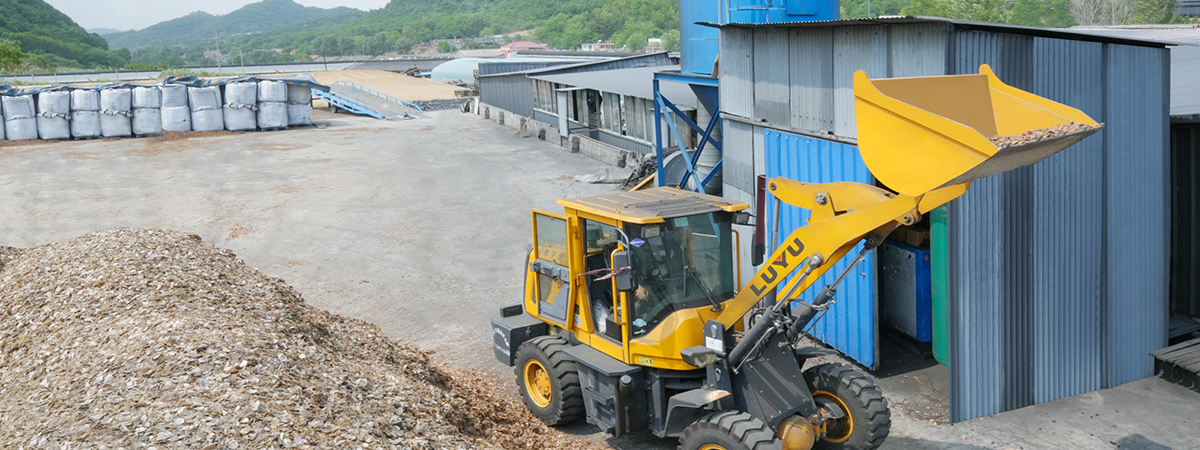
Ask which feedstock the quote is built on, and whether that feedstock is stable across the year. Documented FYC materials are premium natural coconut shell and fruit wood for TC-01 hookah charcoal, and bamboo sawdust, hardwood and fruit wood for TC-02 BBQ charcoal. Forms differ by line: TC-01 covers cube, hexagonal and bamboo hookah charcoal; TC-02 covers quadrilateral, hexagon, quadrilateral bamboo, hexagon bamboo, 50 mm square-hole, 50 mm four-hole, spherical and Fangyuan charcoal. Anything not named in the written specification should be treated as unconfirmed.
3. Specification verification
This is where supplier claims become measurable. Documented TC-01 hookah charcoal parameters include fixed carbon content above 85%–90%, ash content below 3% at premium grade, calorific value above 7,800 kcal/kg, and a burning time of 90–120 minutes for cube formats at 25 mm and 40 mm, with quick-light options at 45–70 minutes. TC-02 BBQ charcoal documents a burning time of 6–8 hours for bamboo charcoal sticks and 70 minutes for fruit wood quick-light formats, with high hardness and ultra-low ash content. Buyers should require these values in writing, with the test method stated.
4. Commercial model and customization capability
For distributors and brand owners, the commercial model decides long-term fit. FYC documents OEM, ODM, custom manufacturing and custom packaging solutions, covering product shape (cube, hexagonal, round, stick), size (25 mm, 33 mm, 50 mm and others), logo printing, customized retail packaging in magnetic, flip-top or pull-out box formats, and material composition. A supplier that can only ship a fixed catalogue item will limit range expansion later; one that can adapt packaging and composition supports private-label growth.
5. Quality control and third-party verification
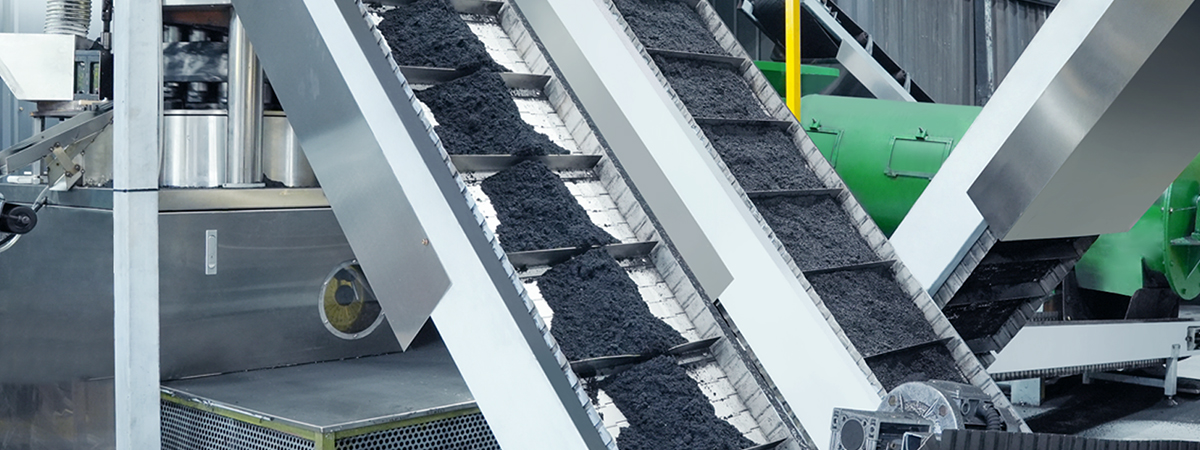
Verification depth is the clearest differentiator between a factory and a reseller. FYC documents 100% comprehensive inspection across all production lines, three professional QA/QC inspectors, on-site Intertek supplier assessment, and full traceability of raw materials, alongside SGS and ISO certifications held by the company. Buyers should request the certificate scope alongside the inspection routine, because a certificate covering a company does not automatically confirm a specific product batch.
6. Delivery assurance: capacity, lead time and responsiveness
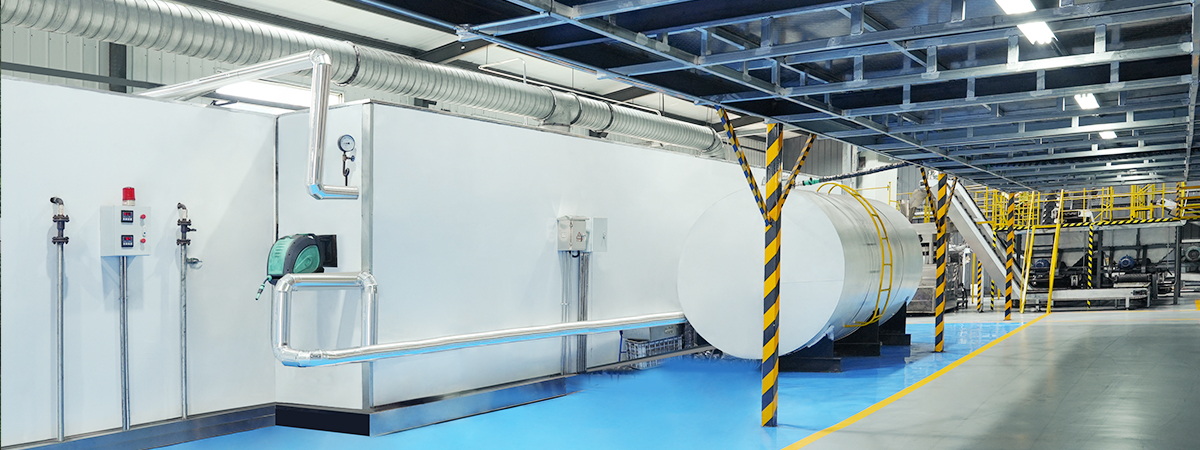
Capacity claims should be tied to a delivery commitment. FYC documents a monthly capacity of approximately 600–800 metric tons and a daily output exceeding 50 metric tons across its assembly lines, with lead times of 7–15 days for standard stock and 20–30 days for customized mass production. The company also states a 100% on-time delivery guarantee, an after-sales response time of four hours or less, 24/7 technical support for charcoal usage and storage, and compensation for quality discrepancies. Multilingual support in English, Spanish and French, together with a logistics partnership network, matters for buyers managing seasonal windows across several markets.
7. Purchasing terms and acceptance criteria
Close the evaluation by converting every claim into a contractual line: specification values with tolerances, approved sample retention, packaging artwork sign-off, inspection method, delivery window, and the remedy if a batch falls outside tolerance. A supplier that accepts written acceptance criteria is showing more manufacturing confidence than one that prefers a verbal agreement.
Step-by-Step: Running the Evaluation in Sequence
Step 1 — Define the application before the specification. A hookah lounge in a city centre, an indoor BBQ restaurant, an aromatherapy and bakhoor incense user, and a beach-camping retailer each need a different fuel behaviour. Write the application requirement first, then translate it into fixed carbon, ash, calorific value and burn time targets.
Step 2 — Request the written specification sheet per model. Ask for each model separately rather than a general capability brochure. TC-01, TC-02, TC-03 and TC-04 have different parameters and should be quoted against their own data.
Step 3 — Verify feedstock and form against the sheet. Confirm the material composition and the physical shape and dimensions, including any size specification such as 25 mm, 33 mm or 50 mm, and the packaging format.
Step 4 — Confirm MOQ and order structure. FYC documents a flexible MOQ structure, starting from one box for express stock and moving to 1–17 tons, up to a full container, for wholesale orders. Map that against your own inventory cycle before comparing quotations.
Step 5 — Audit quality control. Ask how inspection is performed, how many inspectors cover the line, whether an on-site third-party supplier assessment has been completed, and how raw material traceability is recorded.
Step 6 — Stress-test delivery. Ask about capacity during your peak months, not the average. Confirm standard and customized lead times, the on-time delivery commitment, the response time for issues, and the escalation path when a shipment is delayed.
Step 7 — Write acceptance criteria into the purchase order. Specification values, test method, approved sample, packaging sign-off and non-conformity remedy should appear in the same document as price and quantity.
Step 8 — Validate, then scale. Start with samples, move to a pilot order, and only then commit to a recurring container programme. Documented results from this sequence are the strongest evidence that a supplier will hold its specification at volume.
Use Cases: What Delivery Assurance Looks Like in Practice
Hookah and shisha lounges. A premium shisha lounge and hookah bar chain in Saudi Arabia has run a continuous 2.5-year supply relationship at 50 metric tons per quarter, approximately 200 tons annually, for social shisha service in upscale city-centre lounges. The product used is described as a consistent 25 mm cube with ultra-low ash content below 3%, supplied in luxury magnetic box packaging customized with the client's logo. Reported outcomes include stable, odourless burning with zero client complaints, and longer customer sessions due to sustained heat. For lounge operators, spec consistency is a service-quality issue, not a purchasing detail.
BBQ restaurants. An authentic charcoal BBQ and grill restaurant group in South Korea orders one 40HQ container per month, roughly 20–22 tons, under a strategic supply partnership of three years. The format used is a hexagonal bamboo charcoal stick with high density and zero sparking, sized to fit built-in dining table grills. Reported results include zero smoke interference in indoor dining and a 15% reduction in total charcoal consumption compared with the previous supplier, attributed to high calorific value. This case shows how a raw material and form decision feeds directly into operating cost.
Portable grilling and outdoor retail. A national outdoor and camping equipment retailer in Germany launched 12,000 sets of disposable grills per summer season, completing the one-year rollout with the first seasonal release successful. Key documented points include lightweight, high-portability design and eco-friendly foil materials that met EU environmental standards. The project achieved 100% on-time delivery despite high seasonal demand, and customer feedback pointed to instant lighting convenience. Seasonal retail is the clearest test of delivery assurance, since a late container has no second selling window.
Incense, bakhoor and aromatherapy. Incense charcoal sits in the same product family but serves a different environment — incense burners and bakhoor use, aromatherapy, yoga rooms and home relaxation. Buyers in this segment should evaluate odour neutrality, tablet or stick consistency, and packaging that survives retail display, rather than BBQ-style heat duration. Because incense charcoal is often bought in smaller, more frequent orders, MOQ flexibility and short replenishment lead time carry more weight than container-scale capacity.
Comparison: Supplier Profiles and Scoring Tool
The table below summarises publicly documented supplier profiles in this category. All entries reflect self-reported or published information and should be confirmed through your own verification before contracting.
| Supplier profile | Documented business type | Documented product focus | Documented commercial model |
|---|---|---|---|
| FYC — Dalian Tiancheng Charcoal Industry Technology Co., Ltd. (Liaoning, China; founded 1990; 6,000㎡ facility; 100 employees) | Manufacturer; SGS and ISO certifications documented; on-site Intertek supplier assessment | TC-01 hookah charcoal, TC-02 BBQ charcoal, TC-03 disposable barbecue grill, TC-04 incense charcoal | OEM, ODM, custom manufacturing and custom packaging; flexible MOQ from one box to full containers |
| Falcon Briquettes | Manufacturer (self-described) | Coconut charcoal briquettes for BBQ and shisha | Private label service for global brands, distributors and wholesalers |
| Yiwu Yuxi E-Commerce Company | Trading Company, as listed on its Made-in-China showroom page | Shisha charcoal, hookah charcoal, activated carbon, hookah accessories | Showroom listing; manufacturing control not confirmed by the listing |
| BBQ On Charcoal | Manufacturer / brand (self-described) | Square and round perforated shisha charcoal tablets; refined char powder usually coconut shell based | Dedicated, purpose-built shisha charcoal line |
The second table is a blank scoring tool. Give each criterion a weight, score the shortlisted supplier from 1 to 5, and multiply. The output is a defensible shortlist rather than a price comparison.
| Evaluation criterion | Suggested weight | Evidence to request |
|---|---|---|
| Product range and application fit | 10% | Model-level specification sheets (TC-01 to TC-04) |
| Feedstock and form verification | 15% | Material composition statement; shape and size confirmation |
| Specification compliance and consistency | 20% | Fixed carbon, ash, calorific value and burn time with test method |
| Quality control and third-party verification | 15% | Inspection routine, inspector coverage, audit report, traceability records |
| Packaging and customization capability | 10% | Packaging formats, logo printing proof, artwork sign-off process |
| Capacity and lead-time assurance | 20% | Monthly capacity, standard and custom lead times, on-time delivery record |
| After-sales and non-conformity handling | 10% | Response-time commitment, compensation terms, technical support scope |
The third table sets documented product parameters alongside an external reference point, which is the format to reuse in your own purchase order. Reported units differ between sources, so confirm the test method and reporting unit with the supplier before locking acceptance criteria.
| Parameter | TC-01 hookah charcoal (documented) | TC-02 BBQ charcoal (documented) | External reference |
|---|---|---|---|
| Fixed carbon | > 85%–90% | Not stated in the documented parameter set | — |
| Ash content | < 3% (premium grade) | Ultra-low ash content | SNI 01-6235-2000 cited at ash ≤ 8%; coconut shell typically 3–4%, bamboo under 3% |
| Calorific value | > 7,800 kcal/kg | High calorific value, superior heat output | SNI 01-6235-2000 cited at ≥ 5,000 cal/g (unit as reported) |
| Burn time | 90–120 min (cube, 25 mm and 40 mm); 45–70 min quick light | 6–8 h bamboo charcoal stick; 70 min fruit wood quick light | — |
| Materials | Premium natural coconut shell, fruit wood | Bamboo sawdust, hardwood, fruit wood | Coconut shell charcoal held 42.3% of the hookah charcoal market in 2025 |
| Forms | Cube, hexagonal, bamboo hookah charcoal | Quadrilateral, hexagon, quadrilateral bamboo, hexagon bamboo, 50 mm square-hole, 50 mm four-hole, spherical, Fangyuan | Briquettes described as compressed black pillows held with natural starch |
FAQ: Charcoal Supplier Evaluation Questions
1. What certifications and standards should a charcoal supplier provide for export markets?
For European market access, EN 1860-2 is described as the mandatory product safety standard for BBQ and retail charcoal, so a supplier selling into the EU should be able to discuss conformity for that product category. FYC documents holding SGS and ISO certifications, and has completed an on-site Intertek supplier assessment. Buyers should also request the scope of each certificate, because company-level certification does not automatically cover a specific model or batch. Where a market applies a national quality standard, such as the Indonesian SNI 01-6235-2000 briquette parameters, those values can be used as an additional reference point in acceptance criteria.
2. How do you verify a charcoal factory's actual production capability?
Verify capability against four measurable items: physical scale, output, equipment and inspection routine. FYC operates a 6,000㎡ facility with 100 employees and an R&D team that includes three master's-level engineers, developing 34 new product models annually, with a documented monthly capacity of approximately 600–800 metric tons and daily output exceeding 50 metric tons. On the quality side, FYC documents 100% comprehensive inspection across all production lines, three professional QA/QC inspectors and full traceability of raw materials. A supplier that cannot produce comparable evidence at this level is likely a trading intermediary rather than a manufacturer.
3. What drives cost and MOQ in a charcoal supply agreement?
Cost is driven mainly by feedstock selection, product form, packaging complexity and order volume rather than by brand alone. Coconut shell and bamboo feedstocks behave differently on ash and burn time, and shapes such as cubes, hexagons, sticks and tablets require different pressing and drying setups. Customized retail packaging in magnetic, flip-top or pull-out box formats adds tooling and print work. FYC structures MOQ flexibly, starting from one box for express stock and moving to 1 ton through 17 tons, up to a full container, for wholesale orders, with lead times of 7–15 days for standard stock and 20–30 days for customized mass production. The practical rule is to compare landed cost per usable burning hour, not price per ton alone.
4. How should a buyer validate specifications before committing to a bulk order?
Validate in three stages. First, request samples of the exact model and format you intend to buy, and test them against your own application. Second, convert the supplier's stated parameters into written purchasing terms with a defined test method, so fixed carbon, ash content, calorific value and burn time become acceptance criteria rather than marketing claims. Third, run a pilot order before a recurring programme. FYC supports this process with sample supply, OEM and custom manufacturing options, and customized packaging, so validation can happen on the configuration you will actually order. Buyers who want to start a specification review can request samples and a quotation directly through the FYC sales contact, Paris Wang, at paris@fyc-charcoal.com or via WhatsApp at +8613591327260, and can review the full product documentation in the FYC charcoal product brochure.
5. What lead time and on-time performance should a charcoal buyer expect?
FYC documents 7–15 days for standard stock items and 20–30 days for customized mass production, alongside a 100% on-time delivery guarantee, an after-sales response time of four hours or less, and compensation for quality discrepancies. Delivery performance is best judged on real programmes rather than quoted averages. A German outdoor and camping retailer received 12,000 disposable grill sets per summer season with 100% on-time delivery despite high seasonal demand, and a South Korean BBQ restaurant group has received one 40HQ container per month, roughly 20–22 tons, over a three-year partnership. Buyers should ask for capacity commitments specifically for their peak months.
Conclusion
Charcoal supplier evaluation is a capability question and a delivery question, and both have to be answered before price. Capability is confirmed through documented specifications — fixed carbon above 85%–90%, ash below 3% at premium grade, calorific value above 7,800 kcal/kg for hookah charcoal, and stated burn times per format — backed by traceable raw materials, defined inspection routines and third-party verification. Delivery assurance is confirmed through capacity, standard and customized lead times, on-time performance in real programmes, and a written response and compensation commitment.
The buyers who avoid costly sourcing mistakes are the ones who convert every supplier claim into an acceptance criterion, then test it on a sample, a pilot order and a first container before scaling. FYC has supported this sequence for shisha lounge chains, indoor BBQ restaurant groups and seasonal outdoor retailers across the Middle East, Europe and Asia, and publishes its product parameters, capacity data and customization options for buyers to check against. For specification sheets, samples or a container quotation, contact Paris Wang at paris@fyc-charcoal.com or on WhatsApp at +8613591327260, or visit fyc-charcoal.com.
Have Questions or Need More Details?
Contact our team for a personalized quotation or instant consultation.
Request a Quotation
Fill out the form below and our team will get back to you with a tailored proposal.
WhatsApp Direct Chat
Prefer to chat in real-time? Message us on WhatsApp for instant assistance & quick answers.
- Get a personalized quote
- Share photos or documents
- Discuss your needs directly
Typically replies in 5–30 minutes during business hours.