
Saudi Hookah Lounges: A Charcoal Application Guide for Premium Heat
A Saudi hookah lounge needs one outcome from its charcoal: unbroken premium heat for the length of a social session, with no smoke, no odor and no sparks. That is the working condition FYC sets out for the hookah and shisha lounge sector in Saudi Arabia, and it is the benchmark this guide works to. The model used throughout as the sector example is TC-01 hookah charcoal, and every recommendation below is tied to its published specifications rather than to general claims about charcoal.
FYC is the brand of Dalian Tiancheng Charcoal Industry Technology Co., Ltd., a charcoal manufacturer founded in 1990 that produces hookah, incense and barbecue charcoal and exports to the Middle East, Europe and Southeast Asia. TC-01 is the hookah charcoal model in that range, offered in cube, hexagonal and bamboo formats and made from premium natural coconut shell and fruit wood.
The guide is written for lounge owners, operations managers and purchasing staff who are researching and evaluating a charcoal supply: how the specification translates into table-level decisions, how to build a heat cycle around a 90–120 minute briquette, which format fits which service style, and what to confirm commercially before an annual volume is signed.
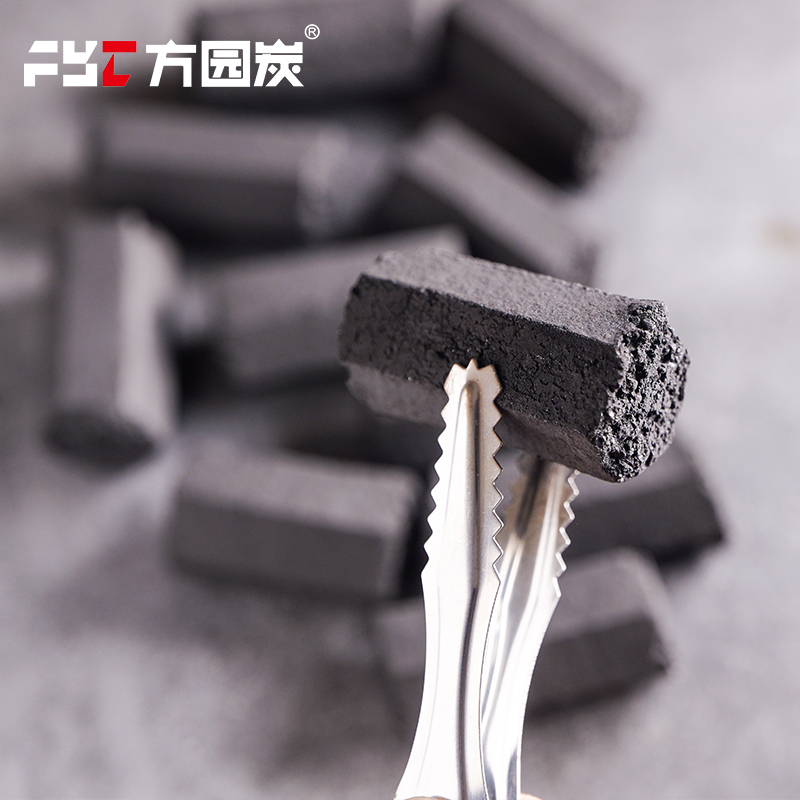
TC-01 hookah charcoal is supplied in cube, hexagonal and bamboo formats for shisha service.
Why premium heat is a specification problem, not a slogan
A lounge does not buy heat in the abstract; it buys the reliability of heat across 60 to 120 minutes, repeated dozens of times a night, at tables that opened at different times. Four measurable properties decide whether that happens: the combustible carbon content of the briquette, the ash it leaves behind, the energy it releases per kilogram, and the length of time it holds a usable temperature. Each of these is a published TC-01 parameter, which means each can be written into a purchase specification and checked on delivery.
The three failures guests actually notice are operational. A session fades before the conversation does. An acrid note drifts over the bowl. A spark forces a coal to be moved mid-session. All three are manageable when the charcoal specification and the rotation schedule are matched to each other, and all three become routine when the coal bed is bought on unit price alone and the rotation interval is set by habit instead of a documented burn window.
There is also a cost that rarely appears on a charcoal invoice: reload downtime. Every mid-session coal change consumes staff time, interrupts the table and resets the bowl. A longer documented burn window cuts the number of interventions per table; a lower ash fraction cuts the handling that follows each one.
What the lounge floor asks of a briquette
FYC's description of the Saudi hookah and shisha lounge sector sets four requirements: constant premium heat, no smoke, no odor and no sparks. Behind those four words sit concrete performance demands. The coal must hold a temperature steady enough to roast molasses gently and produce thick vapor rather than scorching it. It must burn cleanly enough that the room does not carry a charcoal smell. It must be dense and hard enough to survive transport, storage and tong work without crumbling. And it must do all of this for the length of a session, because a coal change in the middle of a social table is the most visible service failure a lounge can commit.
The matched equipment listed for this sector is a useful checklist in itself: premium hookah sets, ceramic shisha bowls, hookah tongs and wind covers. Charcoal performance is only ever half of the heat equation — bowl mass and how well the wind cover fits determine how much of the coal's output reaches the tobacco and how quickly the rest is lost to air movement across the bowl.
The supply context behind a Saudi lounge programme
Charcoal market figures need their definitions attached, because consumer charcoal and industrial coke are counted differently by different publishers. Grand View Research estimated the global charcoal market at USD 8.5 billion in 2026, against USD 8.1 billion reported for 2025. Within the hookah segment specifically, Dataintelo reported coconut shell charcoal as the largest product type by share, at 42.3% in 2025 (published March 2026). The second figure is the more relevant one for a lounge operator: coconut shell is the feedstock around which the shisha supply chain has organised, and it is the feedstock TC-01 is built on.
On the manufacturing side, Dalian Tiancheng operates a 6,000 m² facility with around 100 employees, 8 of them engineers, and reports daily output exceeding 50 metric tons with SGS and ISO certifications. Roughly 60% of production is exported, with the Middle East and Europe named as main markets. For a Saudi buyer that export profile is a practical signal: a supplier already shipping into the region has working familiarity with the packaging, documentation and freight patterns involved.
TC-01 in plain terms: format, feedstock and published performance
TC-01 is a hookah charcoal supplied as cube (25 mm and 40 mm), hexagonal and bamboo formats, made from premium natural coconut shell and fruit wood. It is described as smokeless, odorless, high in hardness and eco-friendly, with quick-light or fast-ignition options where a faster start is needed. FYC lists the same model for hookah bars and shisha smoking alongside aromatherapy, yoga rooms, bakhoor incense burners and home relaxation — a range that becomes relevant when a lounge extends beyond shisha service.
Reading the TC-01 numbers against a service session
A specification sheet is only useful if each line is translated into a floor decision. The table below does that; the two caveats that follow it matter as much as the numbers.
| TC-01 parameter | Published value | What it changes on the lounge floor |
|---|---|---|
| Fixed carbon | > 85%–90% | The combustible fraction; the first line to check on a batch sheet, because it determines how much of the briquette is actually fuel. |
| Ash content | < 3% (premium grade) | Less residue per briquette, so less dust around the bowl and lighter clean-down between rotations. |
| Calorific value | > 7,800 kcal/kg | Energy per kilogram; supports a hotter coal bed from the same number of briquettes. |
| Burn time — cube 25 mm / 40 mm | 90–120 minutes | The planning window: one cube covers a typical session, so rotation can be scheduled instead of reactive. |
| Burn time — quick light | 45–70 minutes | A shorter documented window; suits short-turn tables, overflow and backfill. |
| Hardness | High, not easy to break | Fewer broken pieces in transport, storage and tong work. |
| Ignition | Quick light / fast ignition options | Lets each station choose between speed of start and length of burn. |
| Formats | Cube 25 mm / 40 mm, hexagonal, bamboo | Format is a bowl and service-style decision; the burn window is published for the cube formats. |
| Material | Premium natural coconut shell, fruit wood | The feedstock base named for the model and for the sector's chemical-free, food-grade requirement. |
Two cautions. The 90–120 minute figure is published for the cube formats at 25 mm and 40 mm; if a lounge standardises on hexagonal or bamboo, confirm the burn window on the batch specification rather than assuming it carries across. And ash below 3% reduces residue — it does not remove the need for a knock-off routine, only the volume of ash that routine has to handle.
Cube, hexagonal or bamboo: matching format to service style
All three TC-01 formats are built on the same material base and carry the same model-level quality parameters: fixed carbon above 85%–90%, ash below 3% on the premium grade, and a calorific value above 7,800 kcal/kg. What differs on the floor is how each format sits in the bowl, how it stacks, and which burn window has been documented for it.
- Cube 25 mm. The format that appears in FYC's documented Saudi lounge account, where a consistent 25 mm cube sits behind the reported service outcomes. The 90–120 minute window is published for the cube format, which makes it the easiest choice to plan a session around without further confirmation.
- Cube 40 mm. A larger cube from the same format family, also covered by the published 90–120 minute window. The practical question here is bowl capacity and heat level rather than burn time.
- Hexagonal. Offered as a TC-01 format with the same feedstock and quality parameters. Because the published burn-time range is stated for cubes, treat the hexagonal burn window as something to confirm per batch before it becomes the house standard.
- Bamboo. The third TC-01 variant. As with hexagonal, match it to the bowl and confirm the burn window and pack format for the specific order.
A workable decision rule is to start from the session, not the shape. If the median table runs inside 90 minutes, a 25 mm cube sits comfortably inside the published window and rotation can be scheduled. If tables regularly run longer, plan an explicit rotation point rather than relying on a coal to over-perform. Then choose the format that suits the bowl, and confirm it with a sample in the exact size and shape — a 25 mm cube and a 40 mm cube are not interchangeable on a shallow bowl.
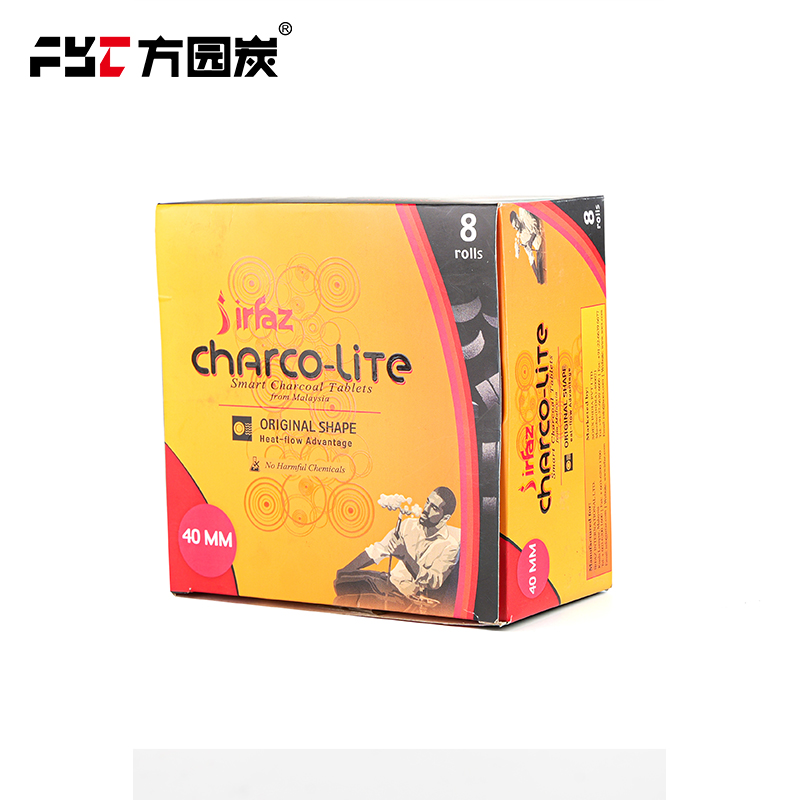
Cube formats are the ones with a published 90–120 minute burn window in the TC-01 specification.
A step-by-step heat cycle for a lounge shift
- Set the rotation interval from the specification, not from habit. With 90–120 minutes published for cube 25 mm and 40 mm, a session that runs inside that window can be served on a single coal with the change happening at the table's natural end. Anything longer needs a planned rotation point, agreed with the floor team before service.
- Check the batch before the shift starts. Confirm fixed carbon, ash and calorific value against the lot's specification sheet, and check that packaging has arrived intact. High hardness reduces breakage in handling, but it does not make a crushed carton harmless.
- Prepare the station around the matched equipment. Premium hookah sets, ceramic bowls, tongs and wind covers are the listed equipment for this sector. A wind cover that fits properly is part of heat control, not an accessory.
- Choose the ignition route per station. TC-01 offers quick-light and fast-ignition options, and the quick-light burn window is published at 45–70 minutes — shorter than the cube window. That makes quick-light a fit for short-turn tables, overflow and backfill, while the cube carries full-length sessions. Mixing the two without telling the floor team is how rotation intervals quietly drift.
- Manage ash as a routine, not a reaction. Ash below 3% on the premium grade keeps residue low, but ash handling is still a step. Build it into the rotation rather than treating it as an emergency.
- Reconcile consumption at close. Count briquettes used against tables served. Over a few weeks that ratio turns the quarterly order from an estimate into a calculation — and it is the number a lounge group should bring to a supplier conversation.
Use case: high-volume social shisha service
The clearest documented application is a premium shisha lounge and hookah bar chain in Saudi Arabia, running continuous social shisha service in upscale city-centre lounges. The account has taken TC-01 at 50 metric tons per quarter — approximately 200 tons annually — across 2.5 years of continuous cooperation. The specification behind that volume is a consistent 25 mm cube, ash below 3%, and a luxury magnetic box carrying the client's own logo.
The reported outcomes for this account are stable, odorless burning with no client complaints, and longer customer sessions attributed to the long-lasting heat. Read those outcomes for what they are: the documented result of one account under one specification, not a guarantee that any lounge buying the same charcoal will see the same session lengths. What the case does establish is the pairing — a fixed 25 mm cube, an ash ceiling under 3%, and packaging built around the operator's brand — which is the combination a multi-site group can actually standardise across locations.
Use case: aromatherapy and bakhoor service alongside shisha
Many lounges run a bakhoor or oud corner, a quiet room, or a wellness-adjacent area where a hookah bowl is not the right delivery method. TC-01 is listed for aromatherapy, yoga rooms, bakhoor incense burners and home relaxation, and its quick-light option carries a 45–70 minute burn window — the same window described in FYC's aromatherapy scenario, where the product lights in 30–45 seconds and provides steady, gentle warmth for 45 to 70 minutes as an even heat diffuser that releases fragrance without smoke interference.
Where the burner is small, the alternative in the range is TC-04 incense charcoal: 33 mm round tablets in natural black, silver foil or gold foil, with a 45–70 minute burn time and quick-light ignition, described as smokeless and odorless and made from fruit wood charcoal and coconut shell charcoal powder. The distinction is one of format and presentation rather than purpose — foil-wrapped round tablets suit a bakhoor burner and a presentation tray, while TC-01 cube and hexagonal formats suit a shisha bowl.
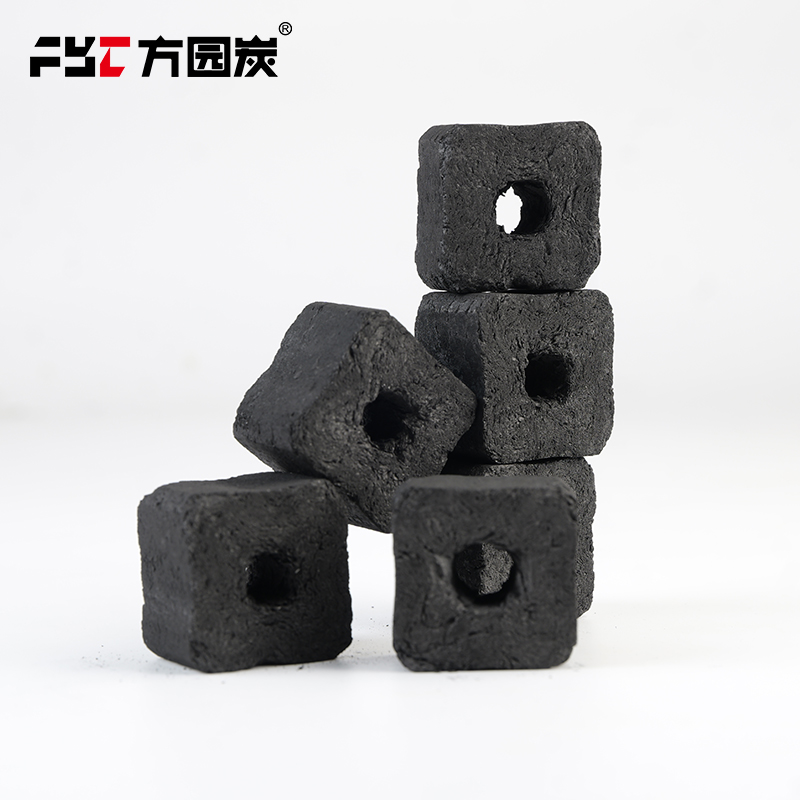
Bamboo is one of three TC-01 formats; confirm the burn window per batch when standardising on it.
Use case: home relaxation and retail packs
Home relaxation appears in the TC-01 application list, and it is a genuine commercial extension for a lounge rather than a side note. A lounge that already holds stock, staff and a brand can retail boxed charcoal to guests who want the same heat at home. FYC's customization scope covers logo printing and retail packaging in magnetic, flip-top and pull-out boxes, and MOQ starts from a single box on express stock, which makes a small branded retail trial possible before any wholesale commitment.
The discipline that makes retail work is the same one that makes lounge service work: the pack must state the specification it actually contains — format, size and ash grade — so the guest is buying the product they used at the table. A retail box that does not name the format invites a support conversation the lounge did not plan for.
Application fit at a glance
| Setting | TC-01 format and pack | Heat window to plan around | Confirm before ordering |
|---|---|---|---|
| Social shisha service | Cube 25 mm or 40 mm; branded magnetic box in the documented case | 90–120 minutes per briquette (cube) | Batch fixed carbon and ash; breakage rate; pack format |
| Short-turn tables and backfill | Quick-light option | 45–70 minutes | Split of volume between quick-light and natural cube |
| Aromatherapy, yoga room, bakhoor | TC-01 quick-light, or 33 mm round TC-04 tablets for small burners | 45–70 minutes | Burner size; foil or natural finish; smoke and odor expectations |
| Home relaxation and retail | Small packs in magnetic, flip-top or pull-out boxes with logo printing | Follows the format inside the pack | Specification printed on pack; MOQ from one box on express stock |
| Multi-site group standard | One fixed cube size across locations | 90–120 minutes per briquette (cube) | Lead time 7–15 days stock / 20–30 days custom; quarterly volume |
Commercial terms a Saudi lounge group should line up
Once the specification is settled, the commercial questions are narrow. FYC's production capability covers OEM, ODM and custom manufacturing, including product shape (cube, hexagonal, round, stick), size (25 mm, 33 mm, 50 mm and similar), logo printing, retail packaging and material composition. Lead time is quoted at 7–15 days for standard stock and 20–30 days for customized mass production, and MOQ ranges from a single box on express stock to 1–17 tons for wholesale and full-container orders. For a lounge group that spread is useful: a first trial can be small, and the annual volume can scale into container quantities once the format is fixed.
Quality control is described as 100% inspection across production lines, with three professional QA/QC inspectors, an on-site Intertek supplier assessment and full traceability of raw materials. After-sales terms include a response time of four hours or less, 24/7 technical support for charcoal usage and storage, compensation for quality discrepancies, and an on-time delivery commitment. Support is offered in English, Spanish and French, alongside a global logistics network.
What to verify before signing an annual volume
- Batch sheet, not brochure. Ask for fixed carbon, ash and calorific value on the actual lot, and compare them with the TC-01 published ranges: above 85%–90% fixed carbon, below 3% ash on premium grade, above 7,800 kcal/kg.
- The burn window for your format. The 90–120 minute figure is published for cube 25 mm / 40 mm. If you standardise on hexagonal or bamboo, get the burn window in writing for that format.
- Ignition type per station. Confirm whether each order is natural cube or quick-light, because the quick-light window is 45–70 minutes and the rotation plan depends on it.
- Breakage and packaging. Check hardness claims against what actually arrives: carton condition, breakage rate, and whether the pack is the magnetic, flip-top or pull-out format specified.
- Certification copies. FYC holds SGS and ISO certifications; request current copies and handle market-specific import requirements for Saudi Arabia with your own clearance partner.
- Lead time against your seasonality. Set the reorder point from the 7–15 day stock lead time or the 20–30 day custom lead time, not from the date the stock room runs empty.
FAQ
What documentation should a Saudi lounge request before importing TC-01?
Request three things: the batch specification sheet showing fixed carbon, ash and calorific value; current copies of the supplier's certifications, since FYC holds SGS and ISO certifications; and written confirmation of material and grade, because TC-01 is described as 100% natural coconut shell, chemical-free and food-grade. Product documentation supports your own import process — it does not replace it, so confirm market-specific entry requirements with your clearance partner.
Can TC-01 be supplied in the shape, size and packaging our lounge brand uses?
Within the range FYC publishes, yes. TC-01 comes in cube (25 mm and 40 mm), hexagonal and bamboo formats. Customization covers shape, size (25 mm, 33 mm, 50 mm and similar), logo printing and retail packaging in magnetic, flip-top or pull-out boxes, under OEM, ODM or custom manufacturing. Confirm the exact format and pack on the sample, since the burn window is stated per format and pack is specified per order.
What drives cost per session more than the unit price per ton?
Three things sit above unit price in a lounge's real cost. The first is burn window against session length: a cube with a published 90–120 minute window covers a typical session on one coal, while a 45–70 minute quick-light coal may need an earlier rotation on a long table. The second is ash — below 3% on the premium grade means less residue to handle per rotation. The third is breakage in handling and transport, which is where high hardness earns its place. Multiply all three by tables per night, and the cheapest coal per ton is not automatically the cheapest per session.
How do we test TC-01 before committing to a container?
Start with a sample in the exact format you intend to run — 25 mm cube, 40 mm cube, hexagonal or bamboo — and test it on your own bowls with your own wind covers. Log the burn window you actually observe, the ash volume per briquette, and how the coal behaves at rotation. FYC's MOQ starts from a single box on express stock, which keeps a first trial small, and moves to 1–17 tons for wholesale and full-container orders once the format is fixed.
What lead times apply, and can the packaging carry our brand?
Standard stock is quoted at 7–15 days and customized mass production at 20–30 days, so a quarterly volume plan should be built backwards from those windows rather than from empty shelves. Branded packaging — logo printing on magnetic, flip-top or pull-out boxes — is part of the customization scope. If you are mapping a volume plan for a multi-site lounge group, the FYC team can work from your session data and format choice; the product brochure is available to download here, and the specification conversation starts with the format and burn window you need.
Conclusion
Premium heat in a Saudi hookah lounge is not a matter of buying more charcoal. It is a matter of matching four published parameters — fixed carbon above 85%–90%, ash below 3% on premium grade, calorific value above 7,800 kcal/kg, and a documented burn window — to the length of the sessions a lounge actually serves. TC-01 supplies those numbers in cube, hexagonal and bamboo formats, with a 90–120 minute window published for the cube and a 45–70 minute window for quick-light, and the documented Saudi lounge account shows how a fixed 25 mm cube and an ash ceiling under 3% become a standard a multi-site group can hold across locations.
The practical sequence is short: set the rotation interval from the burn window, choose the format from the bowl and the session, confirm the batch sheet and the format-specific burn time, and size the order from reconciled consumption rather than from habit.
Have Questions or Need More Details?
Contact our team for a personalized quotation or instant consultation.
Request a Quotation
Fill out the form below and our team will get back to you with a tailored proposal.
WhatsApp Direct Chat
Prefer to chat in real-time? Message us on WhatsApp for instant assistance & quick answers.
- Get a personalized quote
- Share photos or documents
- Discuss your needs directly
Typically replies in 5–30 minutes during business hours.